©

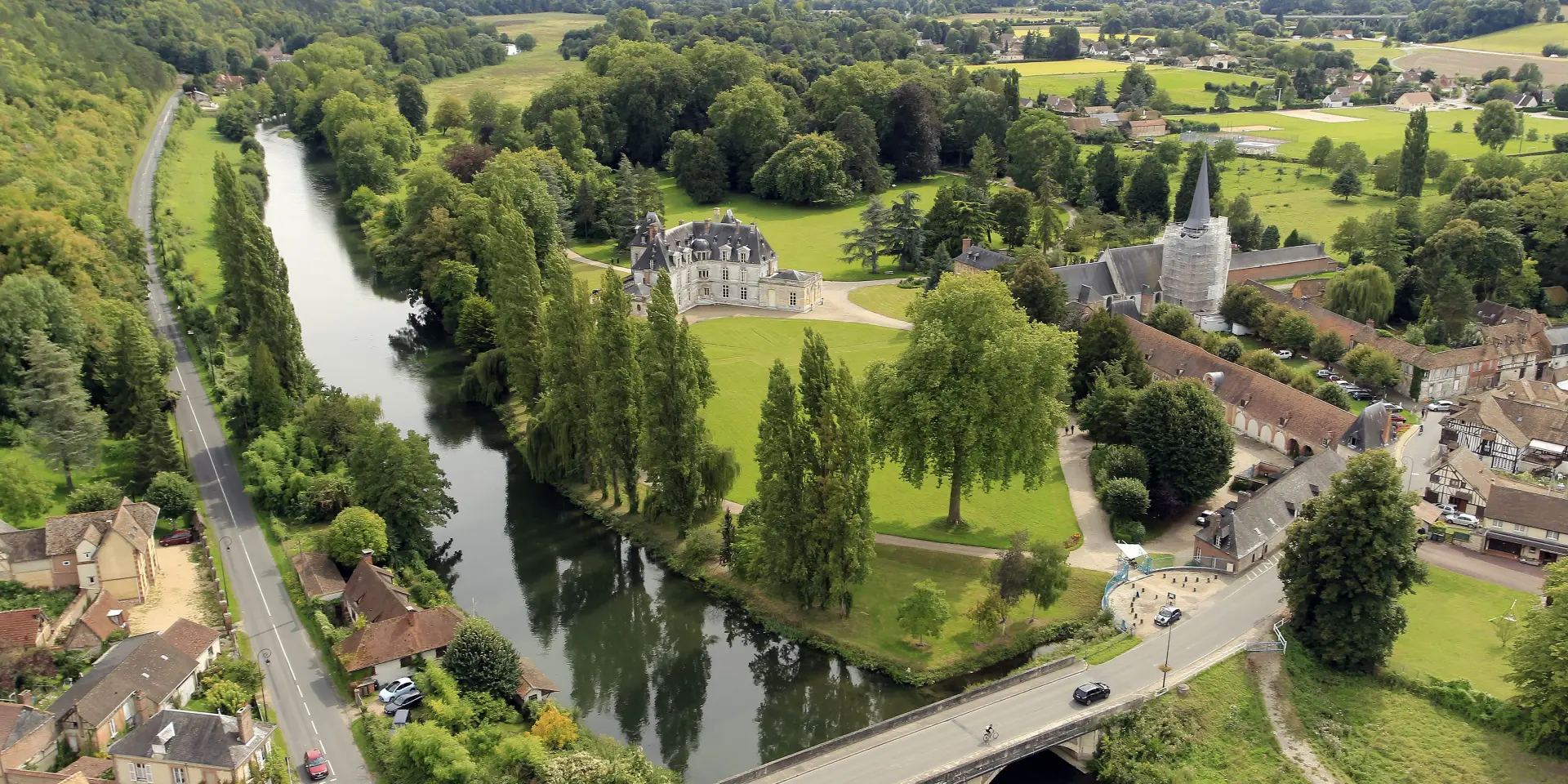
Acquigny and its castle

|

altivolus.fr

Discovery tour

Acquigny: silence... We're rolling!

Discover Acquigny, a town that is firmly in the spotlight…

From history to the big screen…

At the confluence of the Iton and Eure rivers, Acquigny or “Aciniacus” first appeared in the archives in 876, in a royal document issued by Charles the Bald. A coveted barony, the scene of clashes between the Normans, the French and the English, Acquigny gradually became the seat of a fortress and then an elegant residence. Its bastion, standing proudly in the Middle Ages, gave way to a refined residence in the 16th century. Its walls still echo with the footsteps of those who shone at the King’s court and, much later, at the Parliament of Normandy. The mills, the mansions, the white waters… here, the whisper of a vanished prosperity. But Acquigny never disappeared. One day, the cinema arrived and a new, discreet star of several cinematic masterpieces was born.
Discover the city step by step

Stage 1

La maison du Passeur (n°21)

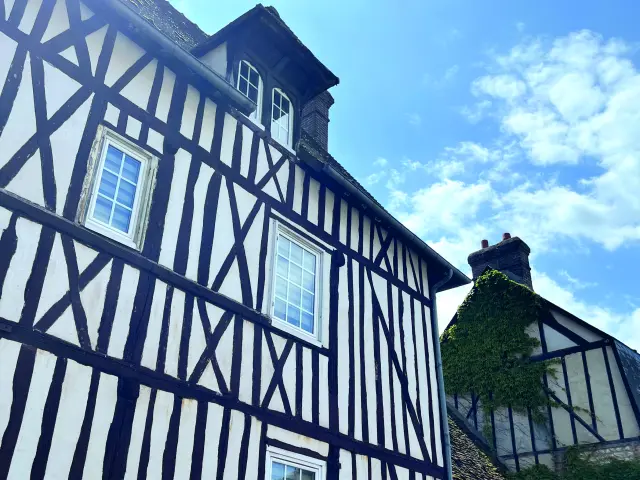
Dating from the 16th century, this house is thought to have belonged to the former ferryman of Acquigny. In those days, there was no bridge: people crossed the Eure on a ferry, paying six deniers per crossing. Curiously, the house is far from the river. In the 19th century, it was moved to its current location on logs. Surprising, isn’t it? But why? The mystery remains…

acquigny-anglais-1.mp3« 1_Chapter 0 » depuis Chapter 0. Piste 1.

Step 2

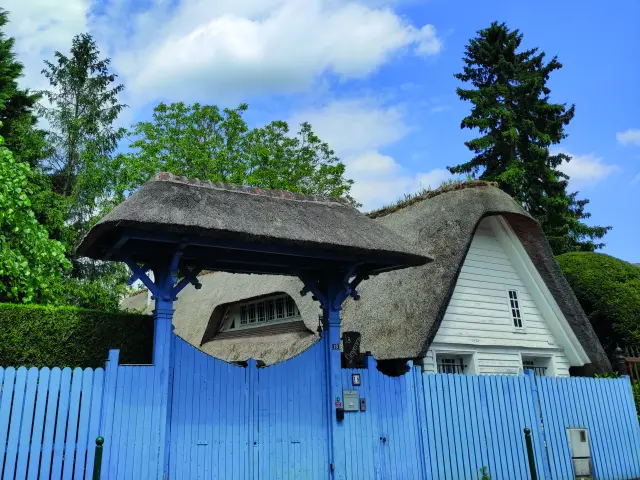
La Chaumière: La Doyenne (n°18)

With its thatched roof crowned with irises, La Doyenne embodies Norman charm. Dating back to 1747, this old farmhouse bears witness to ancestral know-how: a strip of clay on the ridge holds the flowers in place while making the roof watertight. According to an old Gallic custom, irises were used to protect houses from falling sky.

acquigny-anglais-2.mp3« 2_Chapter 0 » depuis Chapter 0. Piste 2.

Step 3

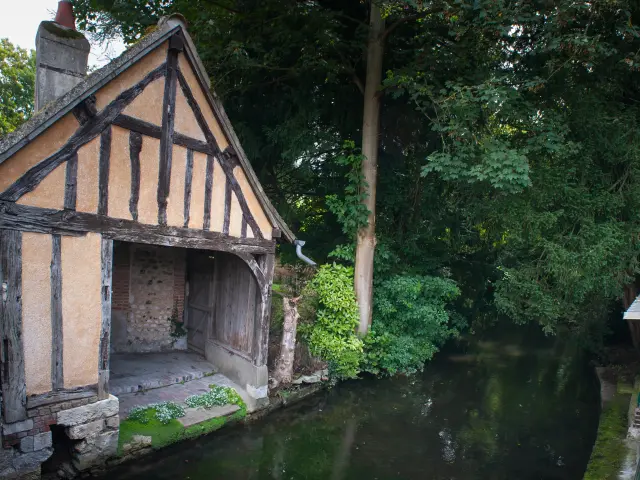
Le Lavoir

Here, people washed much more than clothes: they shared news between two strokes of the beater. This washhouse stands on the banks of the “perched Iton”, an artificial arm of the river flowing above its natural level. A feat of engineering dating back to the 12th century, the monks channelled it to protect the village, feed the castle moat and turn the mills, including the one at Saint-Martin, just across the road.

acquigny-anglais-3.mp3« 3_Chapter 0 » depuis Chapter 0. Piste 3.

Step 4

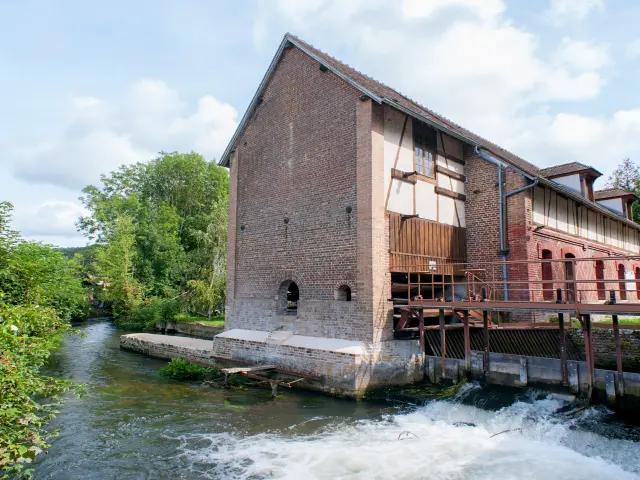
The Saint-Martin mill

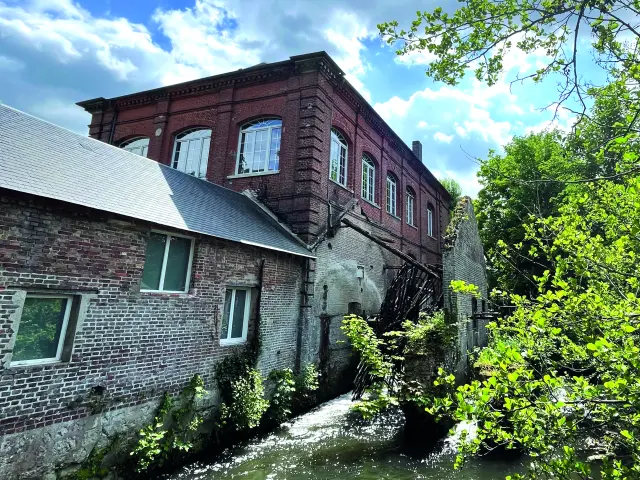
Built in the 11th century as a wheat mill during the baronial era, it was ravaged by fire before being reborn with a hydroelectric turbine. From grain to light and now a decoration workshop, this mill has seen a lot of ideas! Let’s retrace our steps to the town hall, built in 1880.

acquigny-anglais-4.mp3« 4_Chapter 0 » depuis Chapter 0. Piste 4.

Step 5

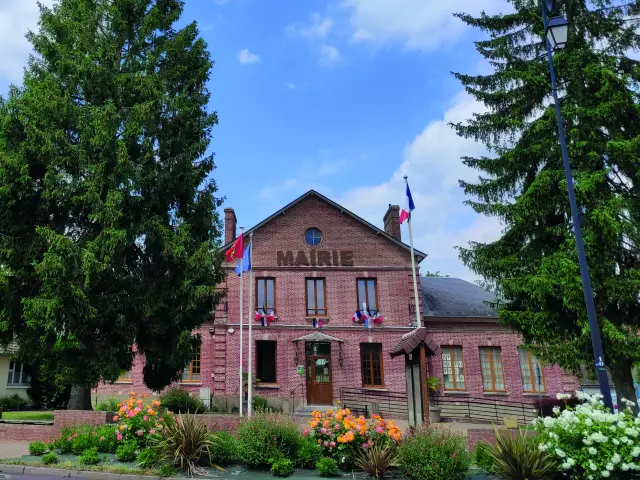
The Town Hall (n°14)

The relics of Bishop Mauxe and Deacon Vénérand are preserved in a shrine that has been classified as a historical monument. They found refuge in Acquigny, a long way from their native Italy. Forgotten martyrs, discreet guardians of the village, they invite you to Sainte-Cécile church: a sacred place, steeped in history… and their history. Cross the pedestrian crossing into rue Saint-Mauxe.

acquigny-anglais-5.mp3« 5_Chapter 0 » depuis Chapter 0. Piste 5.

Step 6

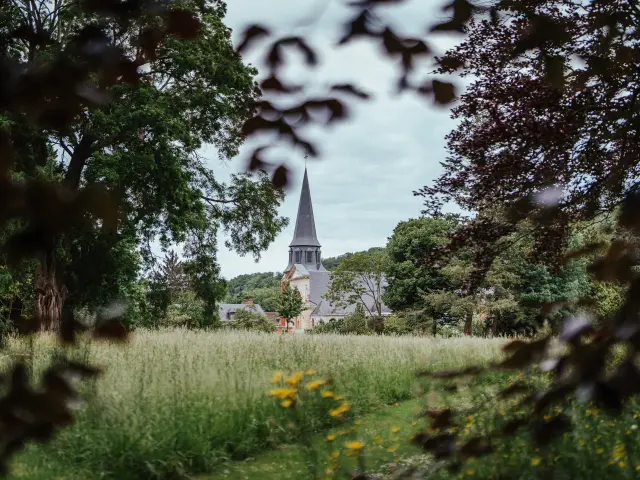
Sainte-Cécile Church

On the neoclassical façade of the church of Sainte-Cécile, two sculpted faces stand silent vigil, Saint Mauxe and Saint Vénérand: “We were sent by the Pope to bring the Gospel to our homeland. But our faith made us targets. Hunted, we had to flee to Gaul. Until the day Sabinus, the ruthless proconsul, found us. He knocked our heads off, along with those of the thirty-eight souls we had converted”. Martyrs of the faith, they found their final refuge in Acquigny. The church of Sainte-Cécile, built in the 16th century and enlarged in the 18th century, was listed as a historic monument in 1975. It combines dressed stone with a brick and rubble bell tower, and contains some real treasures. These include the Chapel of the Holy Spirit, a reflection of the power of the Lords of Acquigny.

acquigny-anglais-6.mp3« 6_Chapter 0 » depuis Chapter 0. Piste 6.

Step 7

The old boys' school

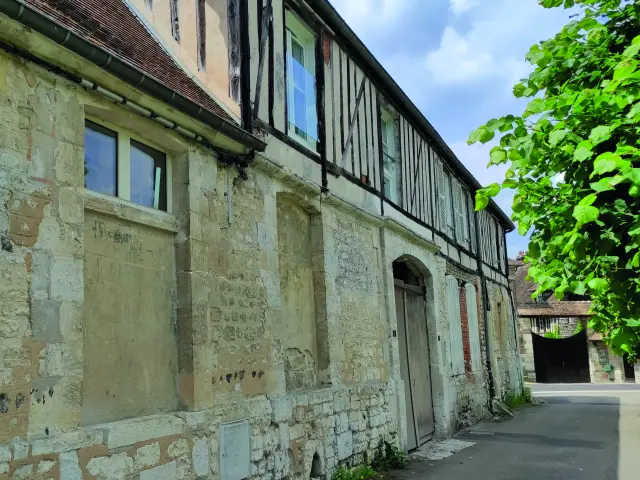
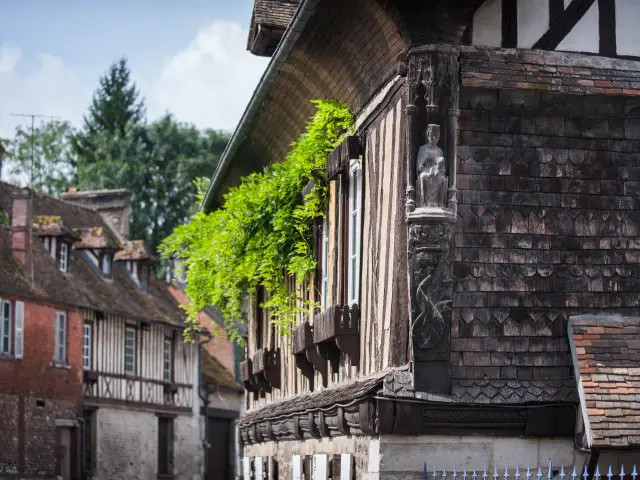
Let’s continue on our way to another imposing building: dressed stone, half-timbering, pointed window wells… The traces of the Middle Ages are still very much present. The centre of the building housed the presbytery, while the teaching brothers occupied the right wing of the boys’ school on the corner. But before it was a place to train minds, it was also a refuge for outcasts. In the 13th century, when leprosy was ravaging Europe, the building housed a sickhouse.

acquigny-anglais-7.mp3« 7_Chapter 0 » depuis Chapter 0. Piste 7.

Step 8

The pavilions: a forgotten fortress

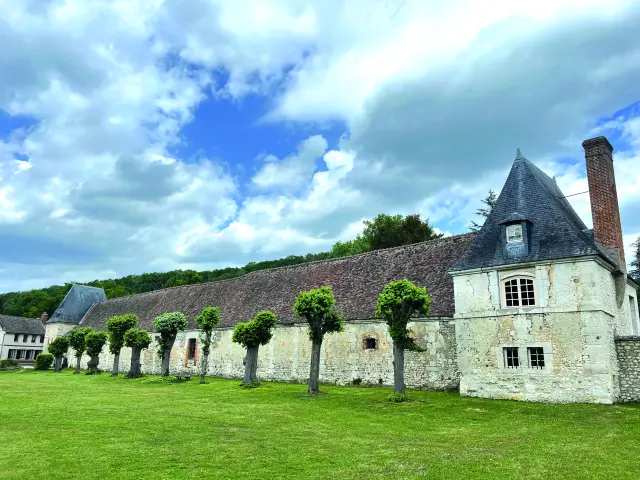
Two pavilions with stone cornices stand on a green carpet. At first sight peaceful, these ancient watchtowers are the last remnants of Acquigny’s first fortified castle, erected under William the Conqueror to keep watch over the Eure. The tower at the corner of the street still bears the traces of double loopholes and is thought to have been used as a royal prison. A strategic issue in the Franco-Norman and later Franco-English wars, the fortress was razed to the ground by order of Charles V in 1378. It was not until the hand of a kind-hearted woman that the estate was reborn from its ruins…

acquigny-anglais-8.mp3« 8_Chapter 0 » depuis Chapter 0. Piste 8.

Step 9

The castle of love

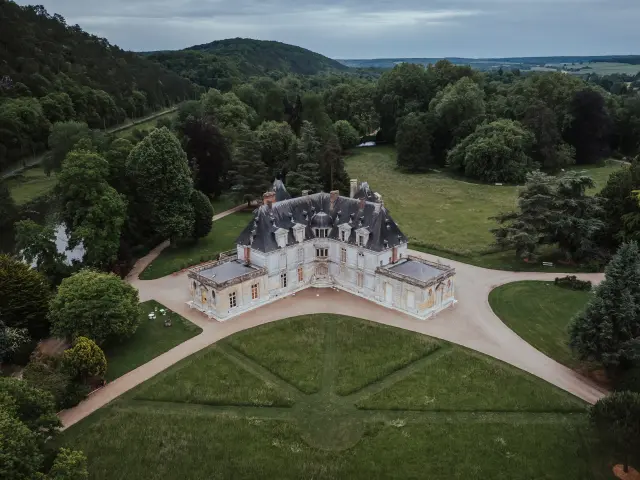
On the gate, the interlaced letters “ALS” whisper a story: that of Anne de Montmorency Laval, cousin of the King and first lady-in-waiting to Catherine de Médicis, who had this château built in memory of her husband, Louis de Silly; perhaps with the help of the famous architect Philibert Delorme. Everything here exudes love: from the sculpted hands on the gate to the orthogonal layout of the château, inspired by the initials of the two spouses. In 1656, the estate passed to the d’Esneval family. The pious “President of Acquigny”, Pierre Robert Le Roux d’Esneval, transformed it in the 18th century. Still owned by the family, the château has been listed as a historic monument and the entire estate as a listed monument since 1993. Today, only the 16-hectare garden is open to visitors, and has been awarded the “Remarkable Garden” label. Step through the gates for a romantic interlude, surrounded by waterfalls, rare tree species and the scent of citrus fruit… But on the other side of the water, a more austere building awaits you. Will you dare to unravel its mystery?

acquigny-anglais-9.mp3« 9_Chapter 0 » depuis Chapter 0. Piste 9.

Step 10

The old prison: courthouse and dungeons

Often referred to as the “old prison”, dating from the 16th century, it was in fact a seigniorial court. The barony of Acquigny dispensed justice here, with the courtroom on the first floor and the dark dungeons below. Cross the bridge over the Eure again. In days gone by, you could plunge into it on sunny days as if into an open-air swimming pool. With each step, time stands still… and the shadows of illustrious visitors still seem to float in the air.

acquigny-anglais-10.mp3« 10_Chapter 0 » depuis Chapter 0. Piste 10.

Stage 11

The

As its name suggests, the Vieux Logis is one of the oldest houses in Acquigny, dating back to the 16th century. Carved beams, a statue of the Virgin and Child, stones steeped in history: the traces of the past are very much alive here. It was here that Sacha Guitry, the famous actor and playwright, is said to have had one of his many romances. He loved the place so much that he had a small private theatre built here, where he would receive his friends out of sight. Among them: Jean Cocteau and Patachou, a great figure of French chanson in the 50s and 60s, who also owned a house in Acquigny… Let’s go and meet her.

acquigny-anglais-11.mp3« 11_Chapter 0 » depuis Chapter 0. Piste 11.

Step 12

The Ruelle mill

Let’s stop for a moment on the bridge of the Grandes Ruelles mill. Listen… The clear, deep waters of the canal glide peacefully by. For almost 2,300 metres, it flows through the village, powering no fewer than six mills in the 17th century. The Ruelle mill, first a mill and then a spinning mill, was one of them. Its wheel and sluice gates, still visible today, are the last remnants of its past. Let’s continue on our way where the waves have carried a completely different voice…

acquigny-anglais-12.mp3« 12_Chapter 0 » depuis Chapter 0. Piste 12.

Step 13

Patachou's old house

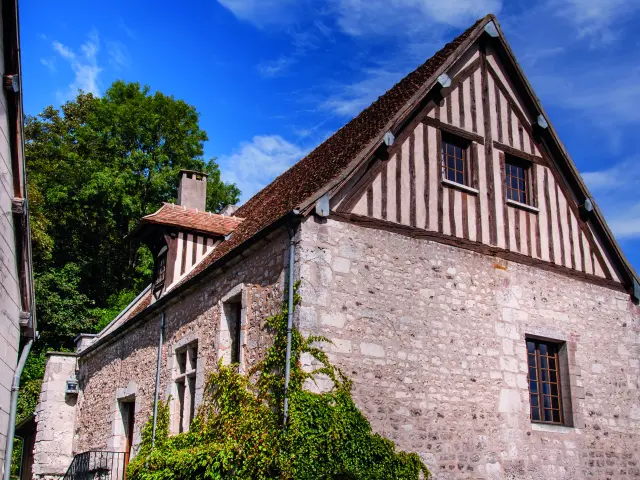
From the rue de la Gourmandise, we can see a discreet Norman half-timbered house that once belonged to Jean Billon and his wife, better known by her stage name Patachou. Actress, singer and Montmartre icon, she used to come here to recharge her batteries far from the hustle and bustle of Paris. She would receive her close friends and artists here, including Maurice Chevalier. Keep walking, and at the corner of the street, a typically Norman 19th-century porch adds a final touch of charm to this stroll.

acquigny-anglais-13.mp3« 13_Chapter 0 » depuis Chapter 0. Piste 13.

Step 14

The old station

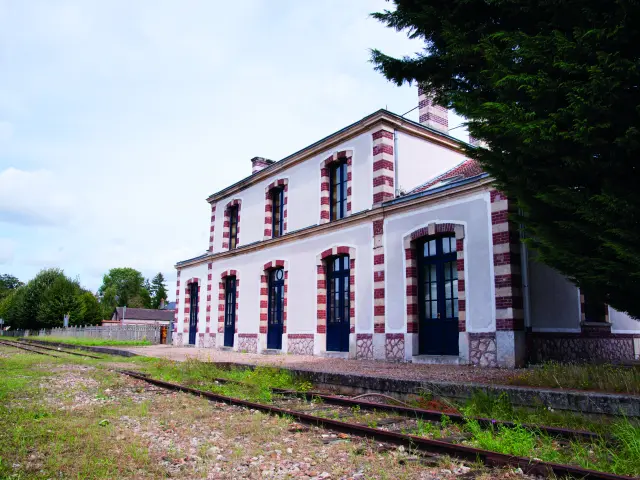
Last stop on our tour… and last journey, this time on film. The setting of Acquigny station, with its old hotel formerly known as “Le Relais des Voyageurs”, has often seduced film-makers. In 1949, it became the setting for an inn in L’Envoi de fleurs starring Tino Rossi, and also in the 1960s in the film Le train. Burt Lancaster co-starred with Michel Simon, whom he described as “the greatest living actor”, and Jeanne Moreau. Even today, the tracks are still asleep, but they seem to whisper the stories of those who left here… or returned.

acquigny-anglais-14.mp3« 14_Chapter 0 » depuis Chapter 0. Piste 14.

The brochure

1 route, 2 ways to experience the adventure!

Discovering

d'Acquigny