©

Hugues-Marie DUCLOS

Discovery tour

Louviers, the city of fabric

Discover the Norman city and its history along the river Eure…

Once upon a time, Louviers…

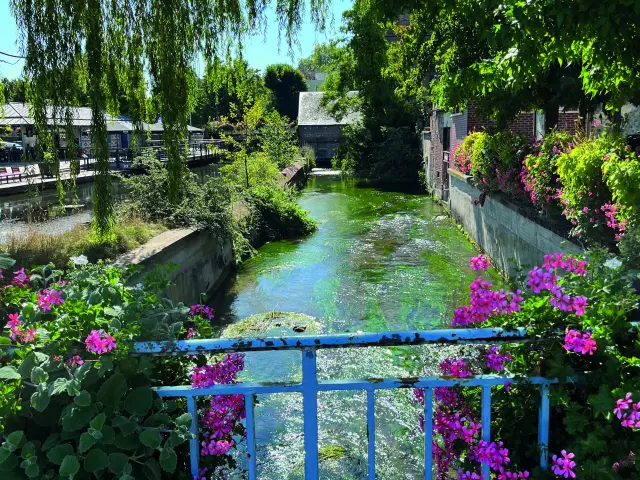
Here, the Eure flows through the town, dividing and meandering… Thanks to it, Louviers has built its reputation as a major centre for woollen cloth. For centuries, the canals have tanned the skins, washed the wool, kept the machines running and developed a remarkable commercial centre. A real open-air factory town! Did you know that it was once the capital of the kingdom of France? The town has not only woven yarns… it has also woven destinies. Its streets have witnessed the retinue of Pope Clement VI, the laughter of one of the king’s jesters and the wild ideas of inventors. Within its walls have echoed the works of Maurice Duruflé, an organist of rare talent, while the paintbrushes of Jacques-Philippe Renout have forever captured its memory. Other great names have passed through the town’s doors, whether in the shadows or in the light of day: Napoleon Bonaparte, Pierre Mendès-France, mayor of Louviers… not forgetting the local boy who became a master of suspense: Michel Bussi, whose novels bring the imaginary world to life.
Discover the city step by step

Stage 1

Place Ernest-Thorel, the ramparts

Imagine Louviers in the 14th century: instead of boulevards, solid ramparts were built to protect the town from English attack. To the west, the upper town, bustling with shops; to the east, the lower town, the suburb of the weavers, crossed by the arms of the Eure. Walk down rue Pierre-Mendès-France, lined with plaques paying tribute to the man who was twice mayor of Louviers. A little further on, another name shines out: Jean-Baptiste Decrétot, a local boy and a leading figure in the textile industry.

LOUVIERS-1-OK.mp3Circuit de Louviers Etape 1

Step 2

The Decrétot factory

You’re standing in front of one of the world’s largest cloth factories, where everything was still done by hand. But the place has changed! Founded in 1779 by Jean-Baptiste Decrétot, the factory covered a vast area that included both workshops and living quarters. British writer Arthur Young described it as “the world’s first cloth factory”, visited by Napoleon himself and admired by Charles X. In 1810, it was run by Louis Ternaux, another major figure in the textile industry. After one of the oldest factories, it’s time to visit one of the most picturesque streets in Louviers.

LOUVIERS-2-OK.mp3Circuit de Louviers Etape 2

Step 3

The House of Parliament

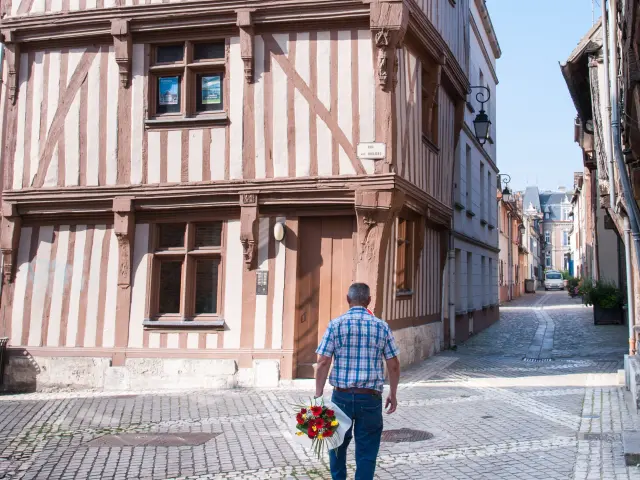
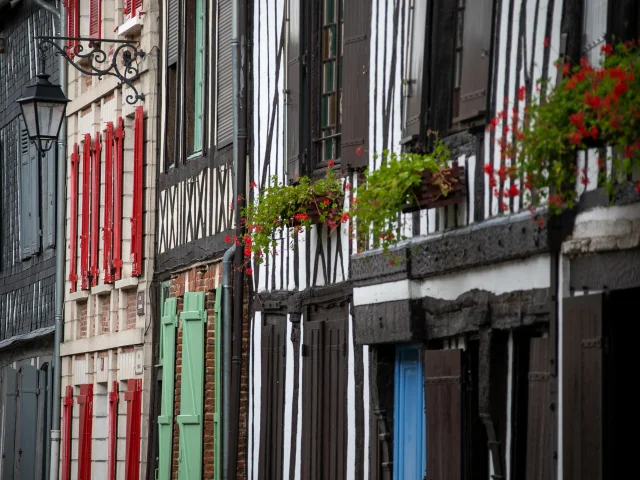
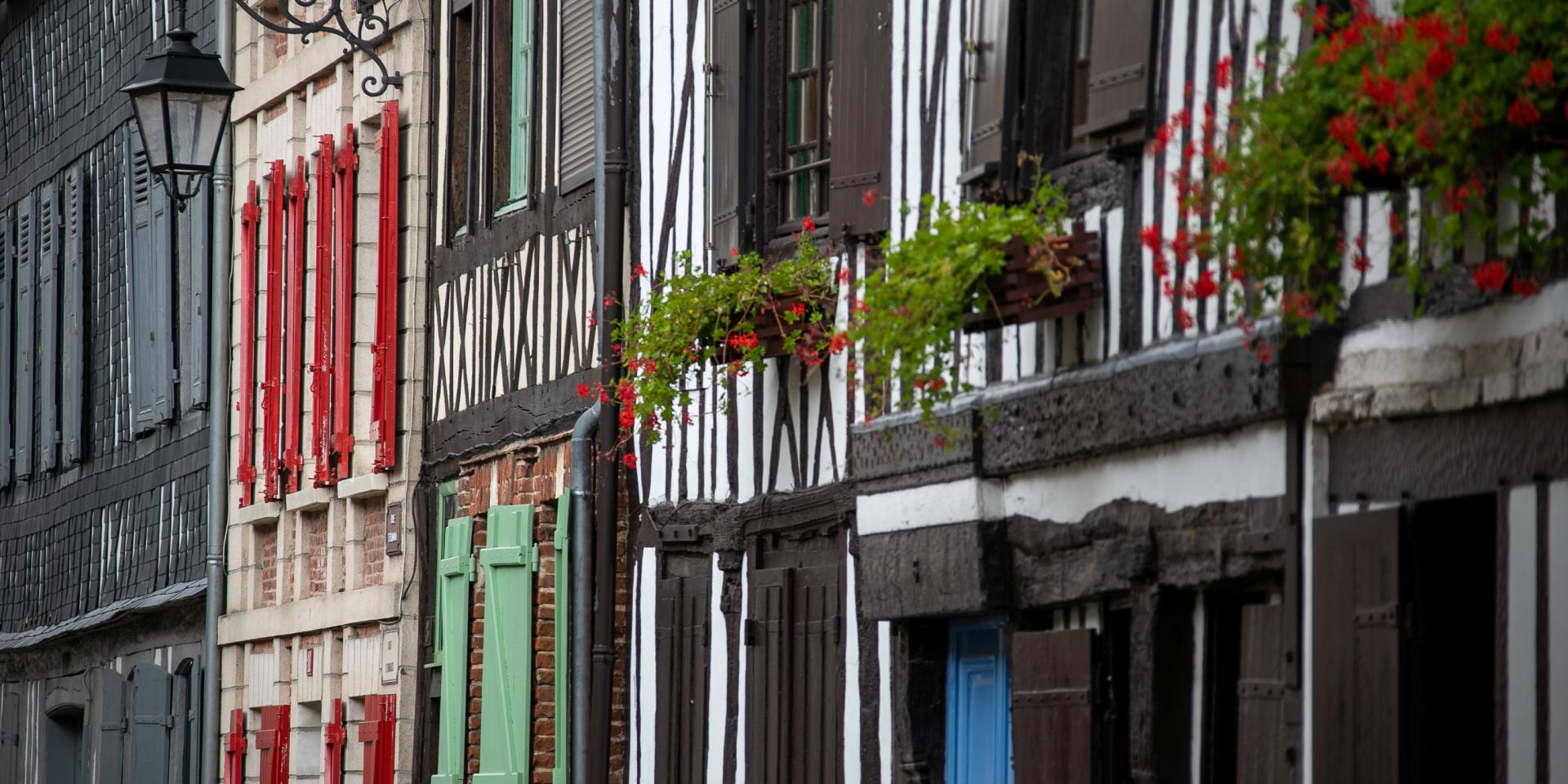
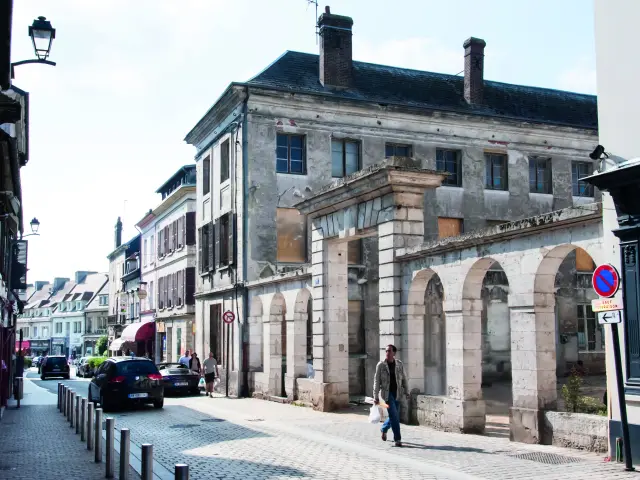
Here you are at the start of the rue des Grands Carreaux, so named because of the large flagstones that still line it. With its 16th and 18th century houses, it offers a rare glimpse of old Louviers as it was before the bombings of 1940. Rue aux Huiliers, meanwhile, evokes a different era, when oil millers worked the walnut oil that was so highly prized here in the Middle Ages. At the corner of these two streets is the house known as the Maison du Parlement. The Parliament of Normandy, normally based in Rouen, is said to have met here twice: in 1500 during the plague and again in 1562, when Rouen was in the hands of the Protestants. You might think it all happened here… But according to the archives, the famous 1562 meeting was held a little further on, in rue Tatin. This street, formerly known as rue Mortuaire, led from the church to the large cemetery. Let’s take a walk down memory lane…

LOUVIERS-3-OK.mp3Circuit de Louviers Etape 3

Step 4

Notre-Dame church

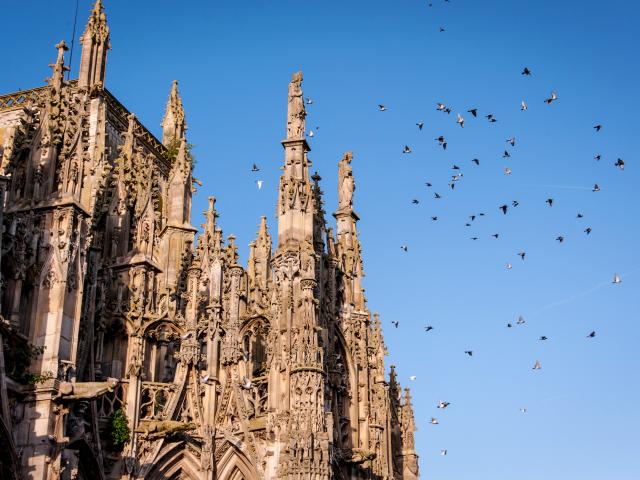
Here we are on the forecourt of Notre-Dame church, a jewel of the flamboyant Gothic style, built in the 13th century and remodelled until the 16th century. Listed as a historic monument, it boasts an impressive flamboyant porch, gargoyles and belfry tower. Push open the door of the church: its restored nave with its 16th-century colours, stained glass windows signed by some of the world’s greatest masters and a great organ from Bonport Abbey await you. Let’s take a walk down rue du Matrey, where you can hear the cries of the merchants…

Discovery tour of the church available from the Tourist Office and
downloadable from tourisme-seine-eure.com.

LOUVIERS-4-OK.mp3Circuit de Louviers Etape 4

Step 5

Place de la Halle aux Drapiers

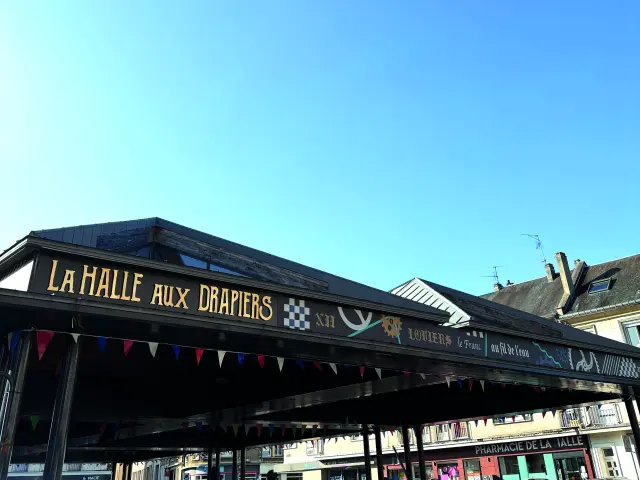
Centuries ago, between the rue du Matrey and the rue du Général-de-Gaulle, the Grande Halle stood where the soul of markets past and present still beats. Before it was converted into a wheat market, the drapers of Louviers used to sell their precious fabrics here. Rue du Châtel, on the other hand, has a very different history: that of a castle, destroyed by the English in the 15th century and never rebuilt. All that remains of the castle are the cellars and underground passages, which are said to abound beneath the cobblestones of Louviers. This may well have been the place where the archbishops, including a future pope, Clement VI, and Georges d’Amboise, minister to Louis XII, met. But another, much more whimsical figure left his mark on Louviers…

LOUVIERS-5-OK.mp3Circuit de Louviers Etape 5

Step 6

The

At the height of the War of Religion, Guillaume Marchand, master apothecary in Louviers, was captured and wounded during an assault. His destiny changed when Henri IV, who had just been crowned king, made him the king’s fool. Behind his facetiousness, he then uttered truths that even the powerful listened to. Now let’s listen to another, older murmur: that of living water, guiding us towards the rue des Quatre Moulins.

LOUVIERS-6-OK.mp3Circuit de Louviers Etape 6

Step 7

Place de la Poissonnerie

Stop for a moment on the bridge: in days gone by, the paddlewheels of four mills turned here, grinding cereals to make bread. Mariners, tanners and fishermen lived to the rhythm of the current. Opposite, on your right, is the Place de la Poissonnerie: once a timber port, it later housed a lively fish market. Follow the gentle lapping of the water towards Ile Petou, on the left, which you can see from the bridge, the former tanners’ quarter. Here, an unusual building still stands in the river.

LOUVIERS-7-OK.mp3Circuit de Louviers Etape 7

Step 8

The Cloister of the Penitents

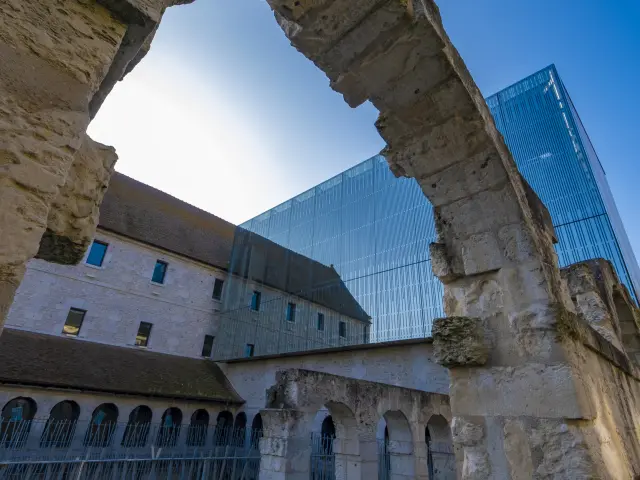
Suspended between the sky and the river, this cloister is unique in Europe! Built in the 17th century, it owes its name to the Pénitents brothers who came to live in Louviers, where their singing set the pace for life in the town. Closed down during the French Revolution, the site has had several lives, including as a prison where inmates painted wool. Today, the former tranquillity has given way to the notes and voices of the Maurice-Duruflé music and theatre school.

LOUVIERS-8-OK.mp3Circuit de Louviers Etape 8

Step 9

La Poste: coat of arms and royal manufacture

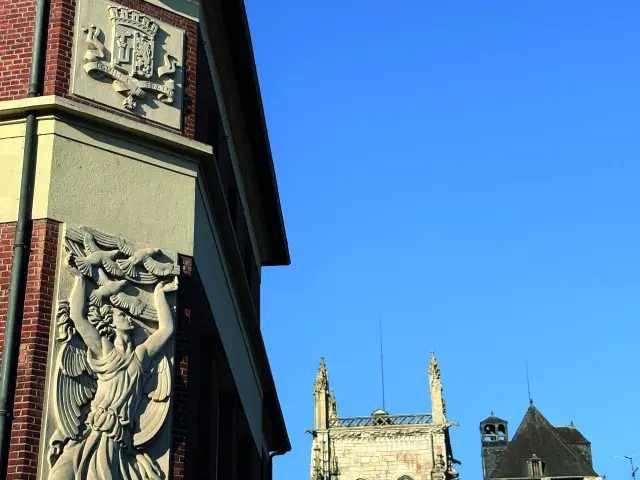
Look up at the Post Office building and see this coat of arms! It tells of the audacity of the people of Louviers who, during the Hundred Years’ War, resisted the English with such bravery that Charles VII granted them a rare privilege: to become “Louviers le Franc” and be exempt from royal taxes in perpetuity. The crowned L on the coat of arms, unique in France, is the proud emblem. In 1681, Colbert, Louis XIV’s minister, set up a royal factory here, which was destroyed in 1940. The draperies then moved into the old tanneries, notably in rue Ternaux, where the cloth-making adventure continued.

LOUVIERS-9-OK.mp3Circuit de Louviers Etape 9

Step 10

Rue Ternaux

It pays tribute to Guillaume-Louis Ternaux, a great name in 19th-century textiles. A visionary, he conquered Europe with his famous cashmere and carded wool fabrics, which were worn on the shoulders of Empress Josephine and Emperor Napoleon. You can still see the loft where sheets were dried. At the end of the street, the residence still contains the only vestige of the Ternaux factory, which once extended as far as the Polhomet stream… Here, the tumult of industry gives way to tranquillity: welcome to the Jardins de Bigards.

LOUVIERS-10-OK.mp3Circuit de Louviers Etape 10

Stage 11

Bigards Gardens and Manor

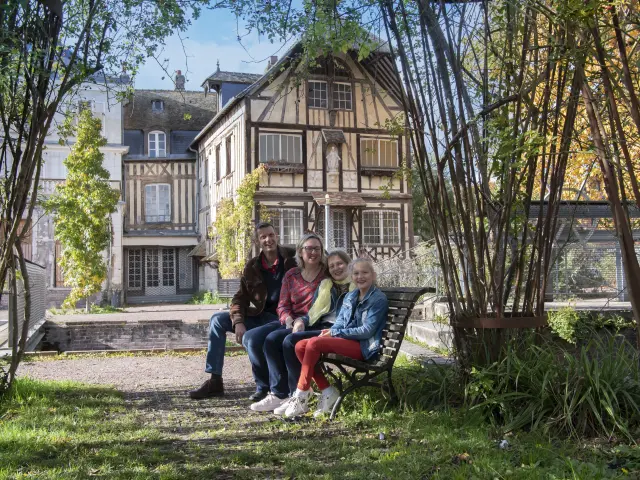
As early as the 12th century, two seigniorial mills belonging to the Bigards family were established here, which were taken over in the 19th century by the de la Londe mill. This contemporary garden houses their manor house, a blend of 15th and 19th century architecture. During the Hundred Years’ War, Louis de Bigards convinced the exiled inhabitants to return to Louviers and rebuild its ramparts. Now let’s leave this place steeped in history and follow the rue du Quai. It leads us towards the port… and the birthplace of a musician whose talent spread far beyond the town.

LOUVIERS-11-OK.mp3Circuit de Louviers Etape 11

Step 12

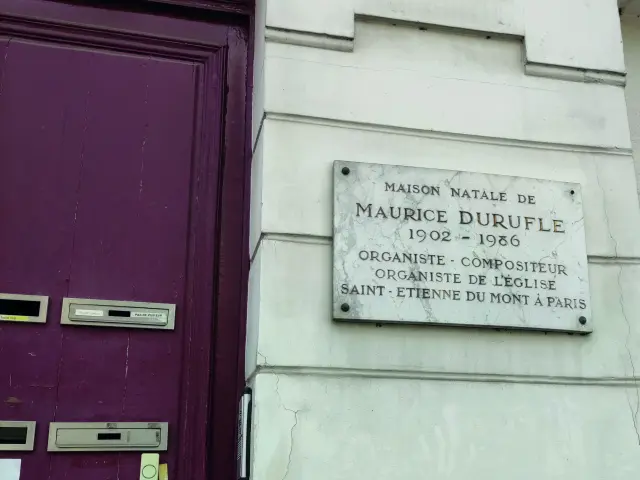
The house where Maurice Duruflé was born

It was here that Maurice Duruflé, the future keyboard poet and one of the greatest organists of the 20th century, was born. Continue on to the Porte de l’Eau… In days gone by, a ferryboat would take you to the other side of the river.

LOUVIERS-12-OK.mp3Circuit de Louviers Etape 12

Step 13

The Water Gate

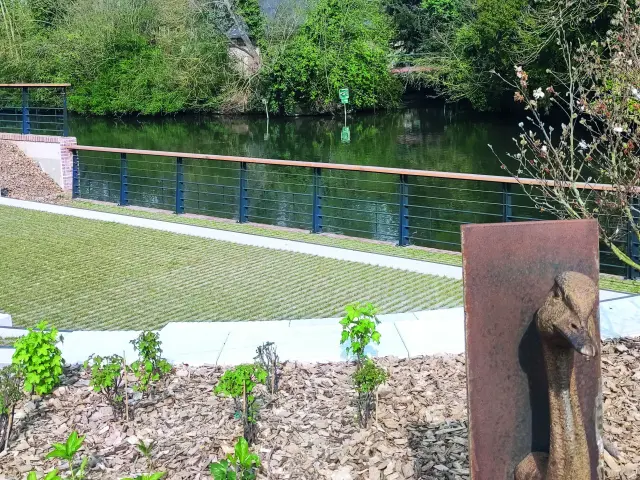
Admire the river from the green theatre on the bank. Once strewn with obstacles, feudal rights, sluices, bridges and mills, it only became easy to navigate with the digging of the Canal de la Villette in 1811, before the railway took over.

LOUVIERS-13-OK.mp3Circuit de Louviers Etape 13

Step 14

Boulevard de Crosnes: the Breton & Mercier factory

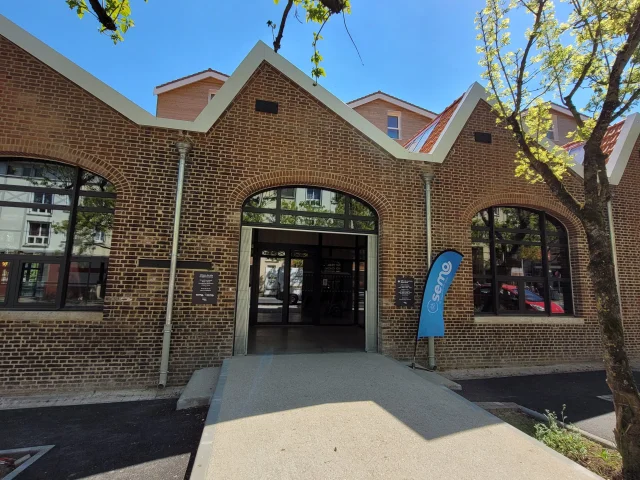
The workshops manufactured weaving machines. Taken over by Léopold Breton, a former foreman, the factory was enlarged and modernised. The north-facing saw-tooth sheds provided constant lighting, before electricity. It became the largest factory in Louviers and one of the largest in France. Today, the Tourist Office, the Maison du vélo and the Espace Semo perpetuate the spirit of innovation.

LOUVIERS-14-OK.mp3Circuit de Louviers Etape 14

Stage 15

Rue Achille-Mercier

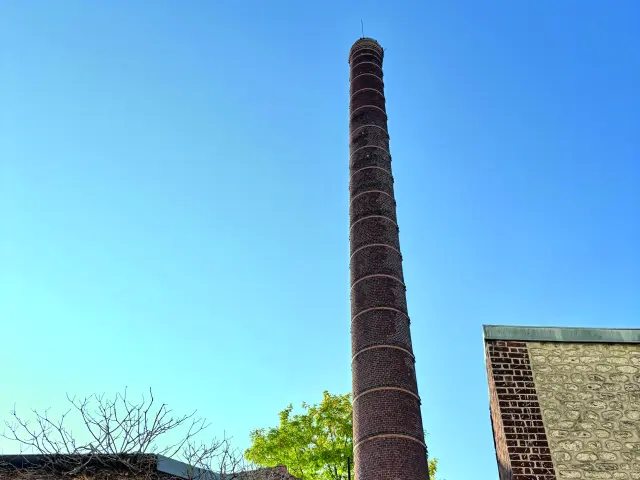
Look up. This tall chimney, standing like a brick lighthouse, belongs to one of the first steam-powered textile factories in Louviers. Here, there was no need for a river: steam was the dominant force, and the chimneys became the totems of a world in the throes of revolution. But after 1945, the chimneys fell. The sirens fell silent. With them gradually disappeared the vibrant rhythm of the workers who made the cloth town beat.

LOUVIERS-15-OK.mp3Circuit de Louviers Etape 15

Step 16

The Louviers Museum

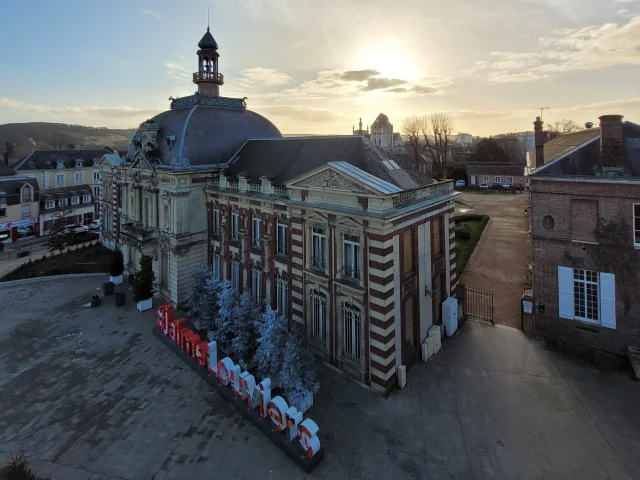
Our journey ends on the Place Ernest-Thorel. Push open the doors of the museum: since 1888, it has watched over the art and history treasures of Louviers, thanks in particular to the generosity of Édouard Lanon. In the textile gallery, the past is brought back to life: shearing machines, Joseph Marie Jacquard looms, great 19th-century machines… Here, industry becomes heritage, and history, living matter.

LOUVIERS-16-OK.mp3Circuit de Louviers Etape 16

The brochure

1 route, 2 ways to experience the adventure!

Discovering

of Louviers